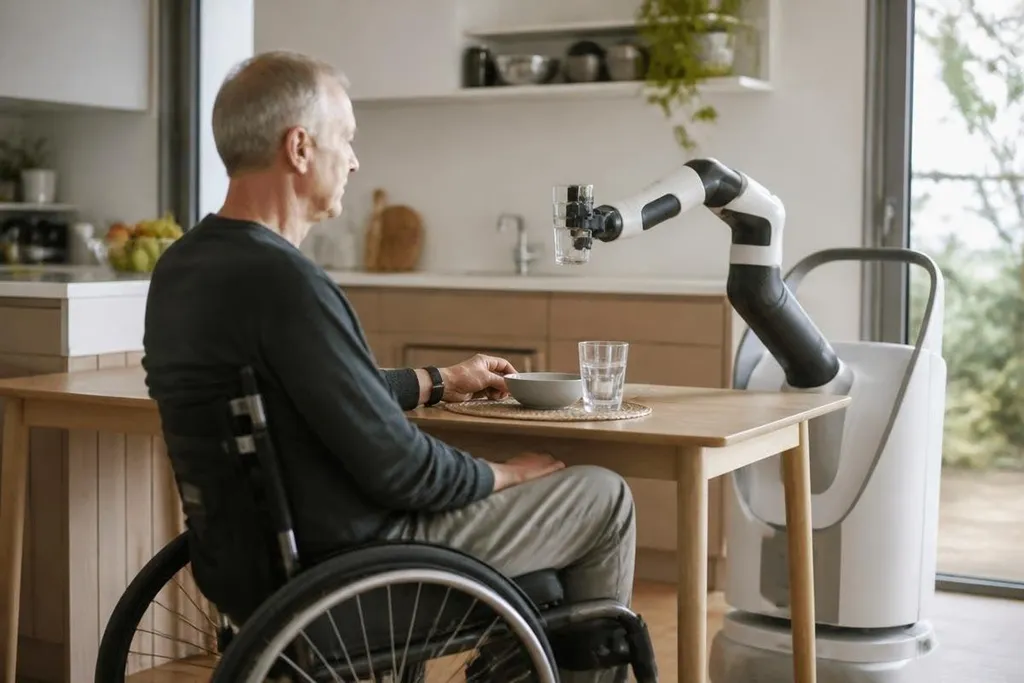
An assistive robot might help someone reach a shelf, move through a home, or lift a heavy object. Its value comes from the choices that follow: deciding when to work, where to go, and who to ask for help.
Quick read
- More control over routine tasks
- Human approval for sensitive actions
- Cost, safety, and setup still limit use
Freedom means control, not total automation
A person may need help with one part of a task while keeping control of the rest. An arm could bring a cup closer, but the person still chooses when to drink and where to sit.
That difference matters. A machine that completes a task without permission can create new risks, especially near people, pets, furniture, or medical equipment. An assistive robot should make a person’s choices easier to carry out, not replace those choices.
The system also needs a clear way to stop. A large button, voice command, or phone control can give the person a direct way to pause movement. The best option depends on what the person can reach, hear, see, or operate.
Where robots may help
Assistive robots can work in several places, but each setting asks for a different design. A home robot needs to handle narrow paths and changing objects. A care facility may need shared controls, easy cleaning, and records of what the system did.
A mobile robot could carry items across a room. A robot arm could help with reaching or placing objects. A wearable system could add force to a person’s movement. These machines all have different limits, so one design won’t fit every need.
The useful measure is not how much the robot can do in a lab. It is how much control a person keeps during a real task. If the robot needs a trained operator for every movement, it may shift work to a family member or care worker rather than reduce it.
A home trial adds details that a lab clip leaves out. It shows whether the person can start and stop the task, recover from a fault, and work without another adult beside them. Assistive robotics coverage from Robot24.com can name the machine and test setting, then report the measured result. That record matters when the next question is personal: what happens when the robot can't adapt to the person using it?
The hard parts are personal
A robot must read its surroundings without making unsafe guesses. Cameras, force sensors, microphones, and mapping software can help, but each adds setup needs and failure points.
Privacy also matters. A machine that sees rooms, hears requests, or records movement may collect details about a person’s health and habits. People need clear control over what gets stored, where it goes, and who can view it.
Cost can narrow access as well. The purchase price is only one part of the bill. Installation, repairs, software updates, batteries, training, and changes to the home can add work and expense.
There is a strong case for human support during setup and repair. That support should help a person control the robot, rather than turn the person into a passive passenger. I’d judge an assistive robot by the control it leaves with its owner, not by the number of tasks in its sales video.
A practical buying checklist
Before choosing an assistive robot, check these points:
- Name the task. Write down the exact action that needs help, including its place, weight, and frequency.
- Test the controls. Make sure the person can start, pause, and stop the robot without outside help.
- Check the failure mode. Ask what happens after a lost network link, low battery, blocked path, or sensor error.
- Review the data plan. Find out what the robot records, how long it keeps the data, and who can access it.
- Price the full setup. Add delivery, installation, training, repairs, replacement parts, and any required subscription.
- Try the real space. Test door widths, floor surfaces, ramps, tables, and the objects the robot must handle.
Assistive robots can widen a person’s choices when they remove a specific barrier and leave the person in control. The open question is practical: can makers build systems that remain safe, private, repairable, and affordable after the first demo ends?